Most teams can't answer that question, and that's exactly where AI rollouts fail. We start where your work actually happens. The queue that backs up. The edge cases your team handles by hand. The tool your people actually use. Standard packages when the use case fits, custom builds when it doesn't.
We stop the expensive guessing.
We show you exactly which AI use-cases will move the needle in your business and which ones won't.
You walk away with a clear strategy, prioritized use-cases, vendor shortlist, and a realistic rollout plan so you only invest where it actually pays off.
We build AI that your team actually uses and your customers feel.
From customer-facing chatbots and internal agents to complete automated workflows, always designed to fit the way you already work.
Result: less manual work, faster responses, and systems that keep improving instead of collecting dust.
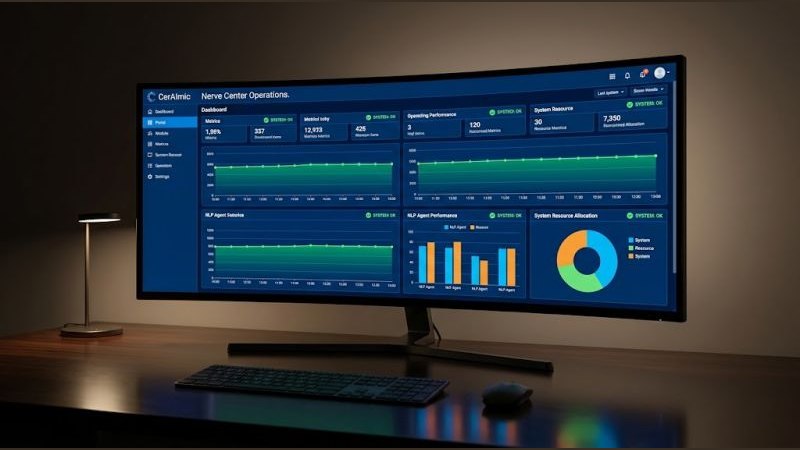
Your AI-powered operations layer that delivers services directly to your customers.
Web design, ticket handling, custom integrations, and more, running continuously while you stay in control.
Think of it as the always-on team that never sleeps, never forgets context, and keeps getting better at serving you or your clients.
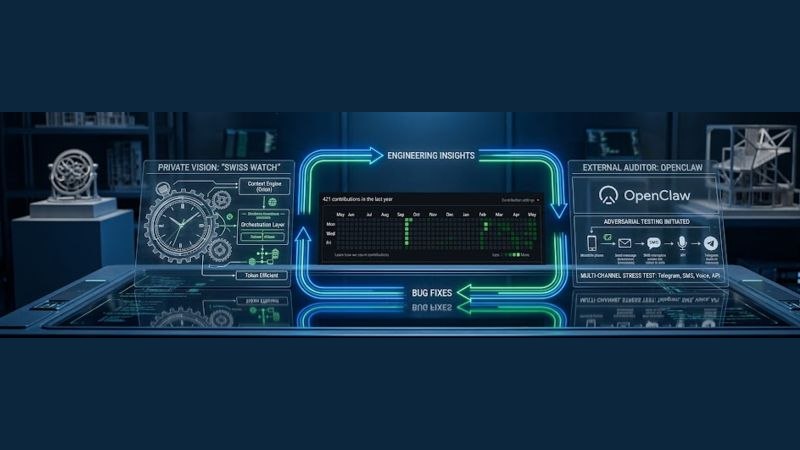
Most AI consultancies sell you a tool somebody else built. CerAImic built its own, ran the firm on it, and advises from what that taught us.
They resell ready-made blocks of service, mixed and linked together. They have not had the hard, deep talks about what you actually do. A block can look close to how a standard workflow runs, but does that fit how you work?
Most AI resellers have never been customer 0. They have not built what they recommend and have not lived with it, so they know the demo, not the edge cases that turn up in month two. They have never looked at their own company the way they would look at a client's, and built there what they would have advised you to do. We call this eating your own dogfood. How would you feel if the CEO of a plane manufacturer did not want to fly in the planes they were making?
A deck, a pilot, a licence. Once it is signed the firm has no way of knowing whether it worked, so there is no pressure to go and find out.
The recommendation routes your work through a vendor's platform, and every hour you run it is an hour you could not take somewhere else.
Models, agents, workflows. The practice grew out of building and reading rather than out of a partner programme, so there is no reselling layer between what we recommend and what we made.
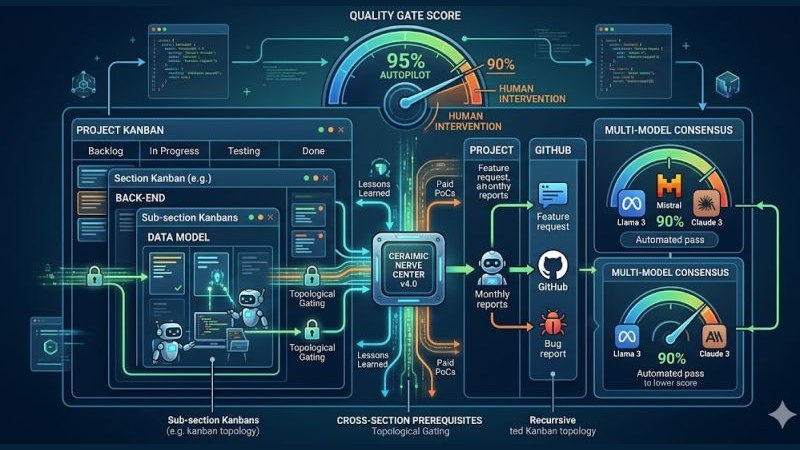
It was built to run CerAImic and our own projects, not to be sold. The framework got some attention and people asked to buy it, but it is made for how we work, so we decided we did not want to turn it into a product. Instead we run proofs of concept. People tell us the problem they want solved, and we look at whether the framework can handle it or needs building for it. That is how it slowly grew into something that faces outward.
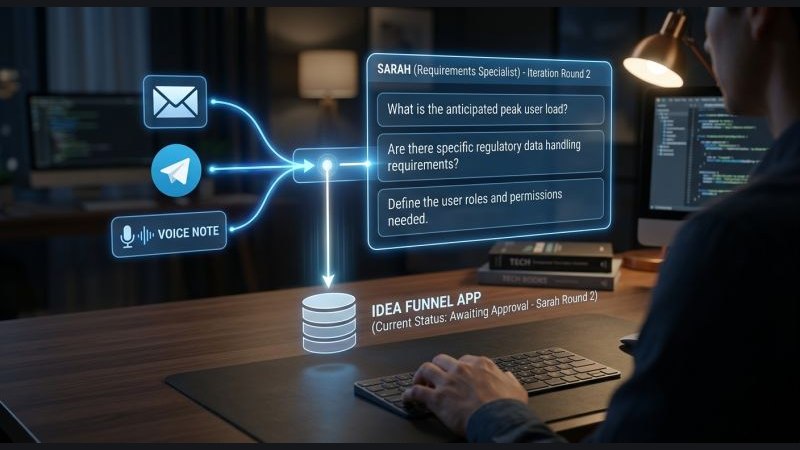
It reads our email and messages, plans appointments, keeps priorities straight, researches what the best consultancy advice and the best implementation path even are, and tells us what is next when we are not sure.
When we recommend a model or a method it is because we have run it on our own work and know where it breaks. That is the whole difference dogfooding is supposed to make.
It started as the tool we run CerAImic on, and it is now what we offer clients. It is an AI-centric system that delivers services to your customers.
Modern, fast websites with AI-native architecture. Built to load fast and actually work.
Triage, response drafting, and escalation routing. Handled faster, with fewer edge cases slipping through.
API integrations, data pipelines, and middleware built for your specific stack and use case.
Built for customers, end to end.
CerAImic has shipped dozens of applications for customers, from initial ideas to customers' preferred hosting platform of choice.
CerAImic has POCs, and has shipped several consumer services, ranging from Divorce Co-Parenting to a neuro-linguistic programming audit platform where couples can analyse what is going on when they argue.
CerAImic is built by Ali Najef Abu Ita, Technical ITAM consultant at Noventiq. CerAImic is a one-person practice. Founder availability is the bottleneck. If you need a 24/7 staffed service desk or an always-on team, you'll need to go with one of the more expensive agencies.
CerAImic is an independent practice. Not affiliated with Noventiq, Flexera, Snow Software, or Octopus.
CerAImic is a young company. We currently focus on small to medium companies.
CerAImic was created in 2025. It started as a side project but is slowly taking shape in something more.

and more
Longer pieces on AI literacy, agentic prompt engineering, and the systems sitting underneath both. Written when something is worth setting down in full.
What if we took Michael Gerber's famous E-Myth cliché: "work on your business, not in your business", and instead of applying it to a human-led company, applied it directly to an AI-centric enterprise?
As a system builder, my workflow is rarely linear.
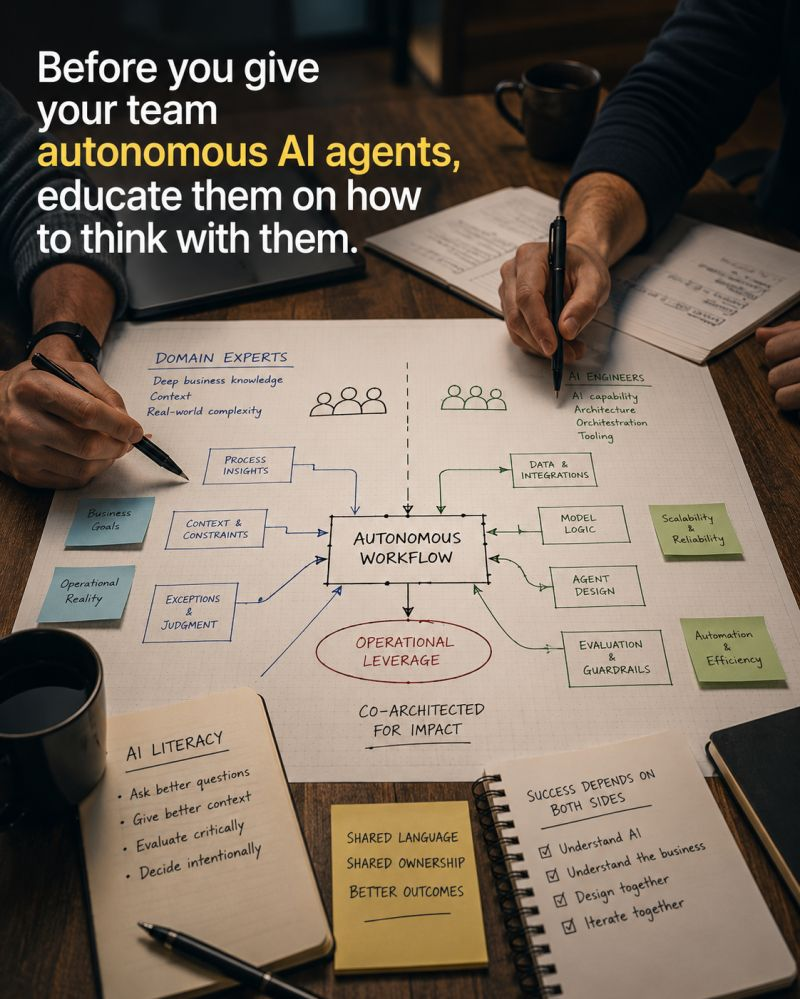
Many AI education programs stop at showing employees which buttons to press.
When I sit down with clients, my job isn't to push a specific system or design the tech stack right away.
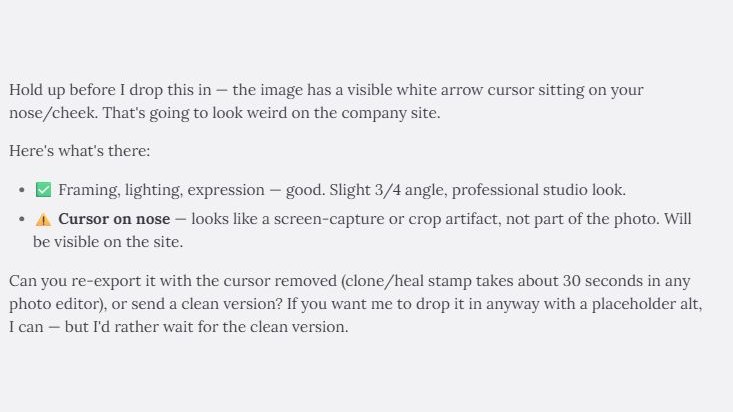
I was recently updating my site and decided to upload a new "About Me" picture.
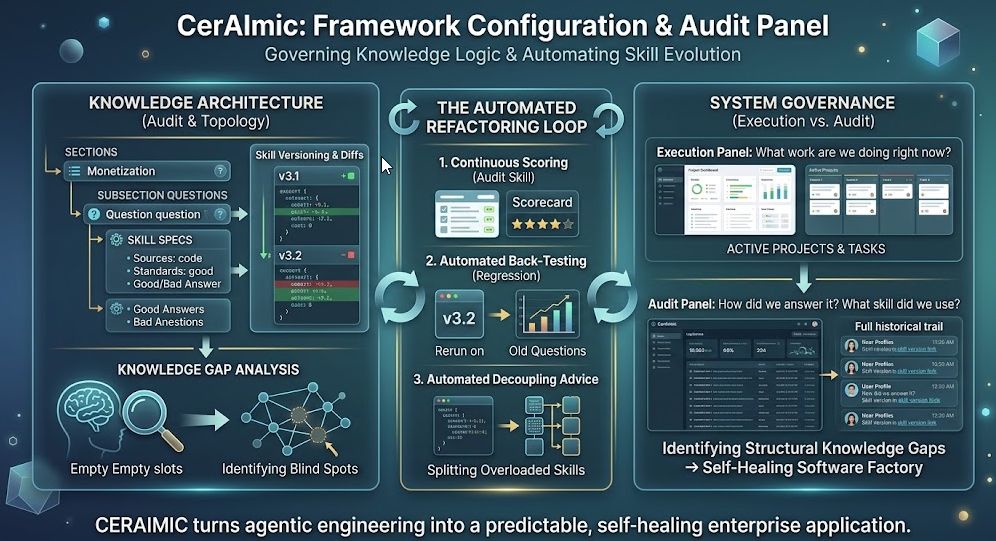
My operational dashboards handle execution. But to continuously harden the system, I needed a panel that governs the knowledge logic itself.
For years, my VR headset was for escaping reality in Flight Simulator.
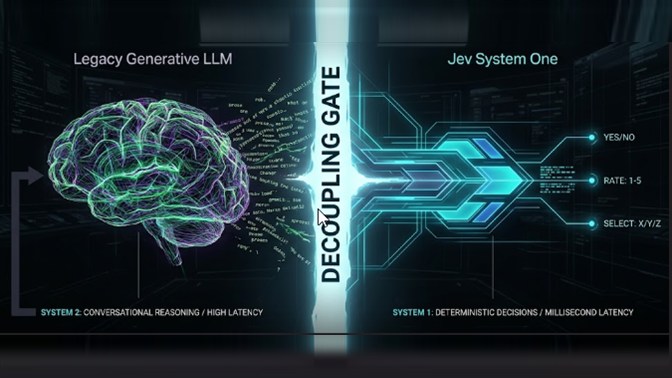
They were between chatbot contracts, needed a bridge solution to keep operations moving, and wanted to know what I could do.
Standing at my door was a delivery woman holding a bouquet of balloons.
I gave my agents actual "Me-Time."
But as you transition from sandbox testing to actual business operations, a sobering reality sets in: emergence is a double-edged sword.
Of course not. That lack of trust would destroy the company's credibility overnight.
I'm always amazed at how fast this technology is, as an AI engineer.
Traditionally, ITAM is designed to eliminate risk by forcing everything into rigid, uniform frameworks.
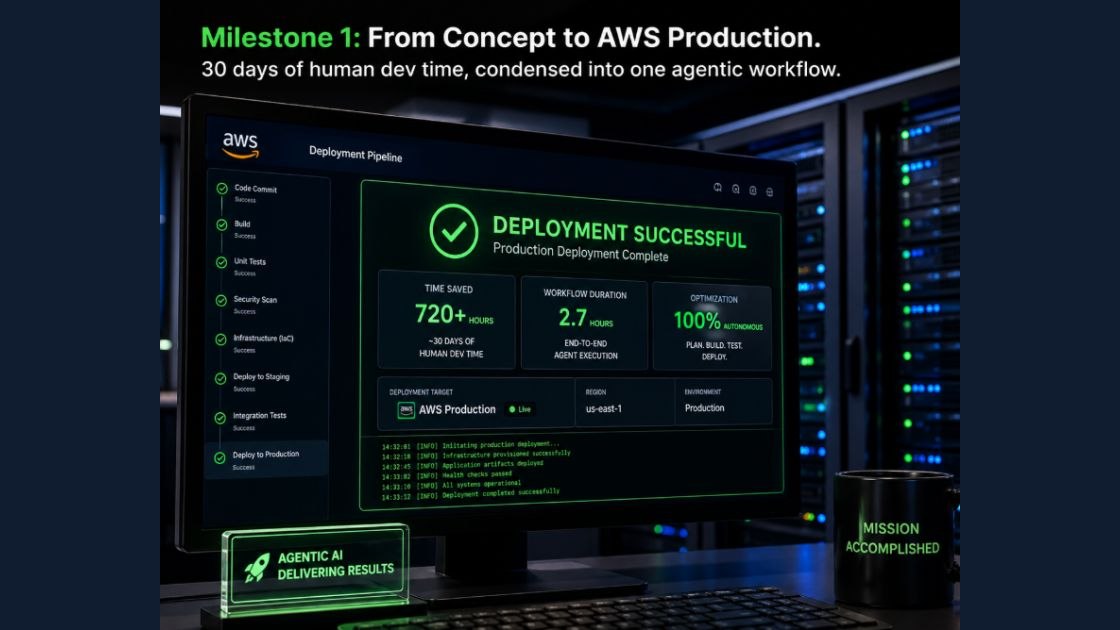
This is just deployment number one. The infrastructure is proven, the framework is solid, and I'm ready for the next one! 🚀
If you don't control the structural boundaries before they code, you don't control the software.
It was an incredibly practical, hands-on event focused on native Android application development.
Without visibility into what they're sending and no mechanism to correct course, you either micromanage (defeating the point) or risk brand damage.
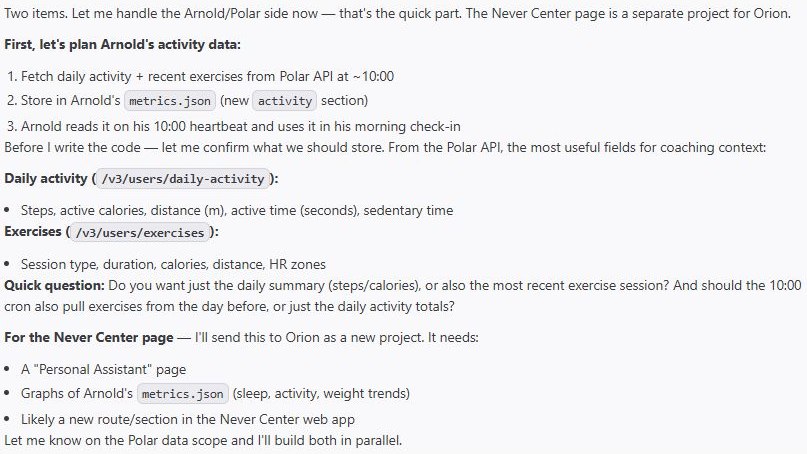
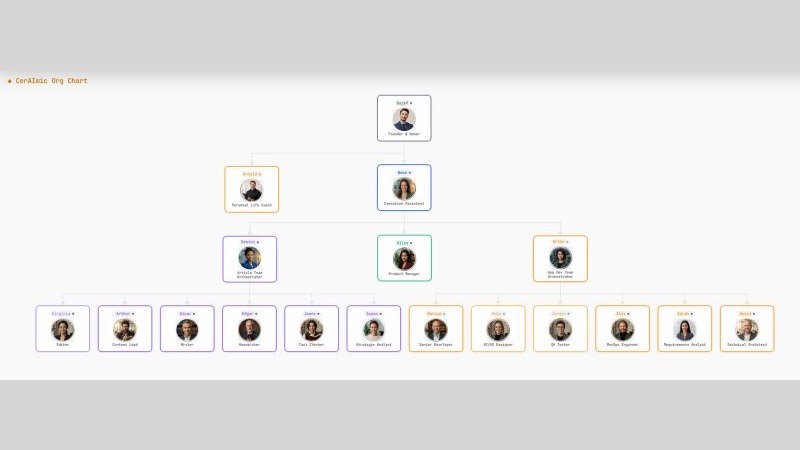
While most of them operate under the "CerAImic" corporate family banner, there is one distinct outlier: Arnold, my personal life coach.
While I've been absent from this feed, I have been anything but idle.
Today, I'm excited to share a milestone: my development agents have just finished their 4th complete application, from initial concept to an automated deployment on Railway.
However, to save everyone some time: The system itself is not for sale.
Meet the team I have running at home.
Twelve questions, five dimensions, one honest verdict on how ready your team actually is.
Your answers stay in your browser, and the report is on the page either way.
What your organisation actually does with AI, mapped onto Regulation (EU) 2024/1689.
A risk tier per use, the obligations that follow, and what is due when. Answer what you use, not a legal quiz.
The law in plain language, written by the people who run the check.
Five questions an SMB actually asks, with the article references one click away.